


How breastfeeding reduces the risk of mother-to-child transmission of HIV
Breastfeeding is universally accepted as the food of choice for all young infants. It provides all the nutritional requirements for infants up to six months of age – breastfed babies don’t need additional food or water – and non-nutritive benefits for optimal growth and brain development. The global recommendation for optimal nutrition of infants by the World Health Organisation (WHO) and the United Nations Children’s and Education Fund (UNICEF) is that infants be exclusively breastfed for the first six months of life. The guidelines further recommend the introduction of nutritionally adequate and safe complementary feeding beginning at six months of age, with continued breastfeeding for up to two years of age. The benefits of breastfeeding, both short and long term, are multiple and varied:
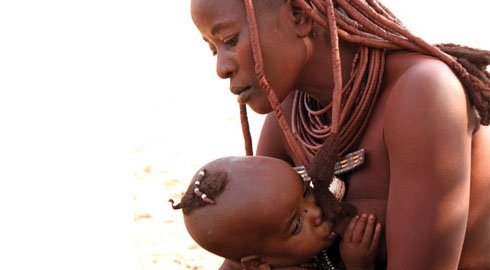
Benefits for the baby
- Readily available.
- Strengthens the baby’s immune system because breast milk contains unique antibodies. Infections like pneumonia and ear infections are more common and more severe in infants who are not breastfed.
- Has a protective effect against necrotizing enterocolitis (inflammation of the bowels) in premature infants.
- Reduces the risk of allergy-mediated diseases such as Type 1 diabetes and asthma later in life.
- Is associated with greater intelligence in older childhood and adulthood.
- Protects against obesity and childhood leukaemia.
The use of formula milk in developing countries may increase the risk of mortality in young children by causing diarrhoeal diseases. Formula feeding is also associated with poor growth and development.
Benefits for the mother
- Faster contraction of the womb after delivery
- Minimises the risk of post-partum bleeding.
- Promotes mother-child bonding and protects against the post-delivery depression or “blues” experienced by some mothers.
- Can also act as a form of contraception by delaying the return of the menstrual cycle (although it is advisable to use contraception).
- A decreased risk of breast and ovarian cancer compared with those who do not breastfeed.
Mixed messaging
Unfortunately, because of the HIV pandemic there are conflicting messages about breastfeeding that overshadow its benefits. Breastfeeding is also threatened by the competitive – often unethical – promotion of formula milk by corporate producers.
Also, research has shown that the HI virus may be transmitted through breast milk from an HIV-positive mother to her infant – a risk present for as long as the infant is breastfed. Public health experts estimate that there is a 10 to 15 percent chance of HIV-infected mothers passing the virus on to their newborns through their breast milk.
Developed vs developing countries
Policies that encourage avoidance of breastfeeding are based on studies from developed countries and are inappropriate for developing countries. In developed countries, HIV-infected women are encouraged to avoid breastfeeding, but in developing countries, largely because of lack of access to clean water and good quality formula and the means to sterilise feeding bottles, avoidance of breastfeeding is associated with increased risk of death and poor growth and development due to diarrhoeal and respiratory infections and malnutrition. HIV-infected women in developing countries are faced with a dilemma – transmit the virus to their infants through breastfeeding, or risk malnutrition and disease by not breasfeeding.
Decreased risk
We now know that exclusive breastfeeding actually lowers the risk of mother-to-child transmission of HIV and antiretroviral treatment (ART) given to the mother and baby further decreases the risk. ART for the prevention of mother-to-child transmission (PMTCT) has evolved from the administration of a single drug (Nevirapine) during labour, to fixed dose combination (FDC) antiretroviral drugs. The FDC drug Atroiza combines Tenofovir, Emtricitabine and Efavirenz and is taken once a day by all pregnant women who test HIV-positive during their antenatal care. This treatment is continued throughout the pregnancy and during breastfeeding.
The HIV-exposed newborn is also started on a daily dose of Nevirapine syrup for six weeks. The provision of combination antiretroviral drugs to both mother and baby, and exclusive breastfeeding for six months with continued breastfeeding up to one year as recommended in the current South African PMTCT policy of April 2013 has made breastfeeding much safer for HIV-positive women.
Exclusive breastfeeding
Many breastfeeding mothers do not practice exclusive breastfeeding and give their babies water, formula and other foods before six months of age. This so-called mixed feeding increases the risk of the HI virus being transmitted to the baby because the infant’s delicate bowels may be damaged by the foods resulting in microscopic fissures through which the virus can enter the baby’s system.
The challenge for health care professionals is to educate and support mothers in exclusive breastfeeding for the first six months. There is a need to expel myths and change mindsets towards exclusive breastfeeding by continuous education and support. This, together with the provision of antiretroviral drugs as per national policy, will ensure that babies receive the full benefits of breastfeeding and remain free of HIV infection.
In conclusion
Exclusive breastfeeding, even in HIV-positive women is an important strategy for child survival. If antiretroviral drugs are given to both mother and baby and an HIV-positive woman is fully adherent with the treatment throughout the duration of breastfeeding, the actual risk of transmitting HIV through breast milk is exceedingly low.
The best food for all babies is still breast milk whether or not a mother is HIV infected.
Prof Muthuhadini Mawela is head of Neonatology, University of Limpopo (Medunsa campus).
Dr Kgomotso Sanyane is a Neonatology fellow, University of Limpopo (Medunsa Campus).